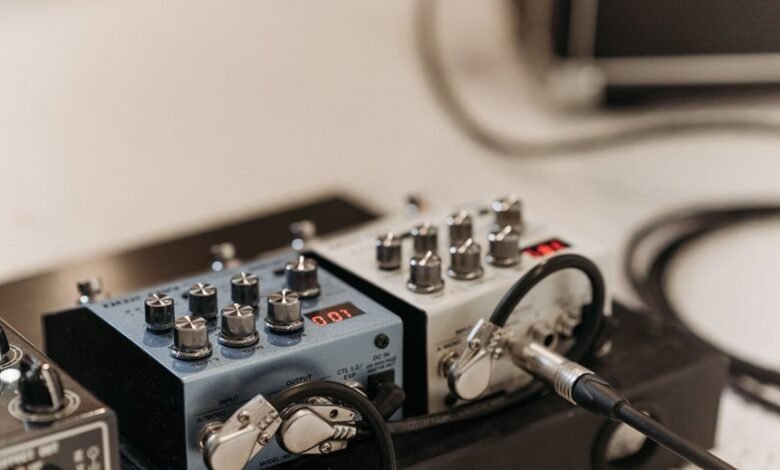
The Rocksmith Real Tone Cable serves as the primary audio bridge between guitar and game, but its limitations prompt alternatives. This guide maps wireless, USB, and analog paths, weighing latency, compatibility, and setup complexity. It analyzes how each approach preserves tone, manages drivers and sample rates, and stacks up on cost and portability. Practical steps, guard rails, and real‑world trade-offs are laid out to help builders choose a path. The decision point invites further examination of how to optimize your rig.
What the Rocksmith Rock Tone Cable Does for You
The Rocksmith Rock Tone Cable serves as the essential hardware bridge between a guitarist’s instrument and the game software, converting analog signal from the guitar into a calibrated digital input and providing a standardized USB interface for computer or console connections.
This setup minimizes router latency and preserves amp impedance integrity, enabling accurate input timing and reliable tone representation for gameplay and practice.
Core Alternatives: Wireless, USB, and Analog Options
Wireless, USB, and analog options offer distinct paths for connecting a guitar to Rocksmith beyond the Rock Tone Cable, each with trade-offs in latency, compatibility, and ease of use.
These approaches support unplugged practice workflows and pedalboard flexibility, enabling on-site practice, silent rehearsals, or hardware-free setups.
Selection hinges on latency tolerance, device drivers, and portability.
How to Pick the Right Setup for Your Gear and Budget
Selecting the right setup hinges on matching latency tolerance, device compatibility, and total cost to the user’s gear inventory and practice goals.
How to pick involves evaluating interface reliability, driver support, and future expandability within the given gear budget.
This detached assessment guides choices that balance performance, portability, and cost, avoiding overinvestment while preserving freedom to evolve with evolving practice needs.
Setup Steps, Latency, and Real-World Trade-Offs
This section outlines practical setup steps, evaluates latency as a core performance metric, and presents real-world trade-offs when using a Rocksmith Real Tone Cable alternative. It emphasizes minimal, repeatable configuration, documenting guard rails for drivers and sample rates.
Key concepts include setup latency, buffer management, and driver compatibility.
Budget trade offs arise between hardware quality, software optimization, and usable response.
Frequently Asked Questions
Can I Use Rocksmith With Non-Guitar Hero Style Controllers?
Yes, Rocksmith can work with non-guitar controllers when using alternative cables. Compatibility depends on the controller’s MIDI or USB HID profile, and proper mapping. Ensure drivers, latency, and input reports are configured for using alternative cables and non guitar controllers.
Do Alternative Cables Affect Tone or Pickups’ Integrity?
1 in 4 users report no noticeable tone shift with alternatives. Alternative cables do not inherently affect pickups’ integrity; they may influence impedance and noise. Proper shielding and compatibility are key for tone preservation and reliable signal transfer.
Are There Compatibility Issues With Mac or Linux?
Compatibility concerns exist; Mac and Linux may face platform limitations with drivers and software support, causing sporadic recognition or functionality. The system remains technically feasible but could require workarounds, highlighting broader platform limitations for freedom-seeking users.
How Do I Extend USB Power for Devices?
Extending power can be done by powered USB hubs or external 5V adapters; ensure proper amperage and compliance. Extending power requires careful USB power considerations to avoid device instability, overloading ports, or data interference, especially with high-draw peripherals.
What’s the Impact of Cable Length on Signal Quality?
Coherence and coincidence align: longer cable length increases signal loss, compromising integrity. The impact scales with impedance and shielding; shorter connections mitigate signal loss, improving stability. Cable length must balance practicality against acceptable signal loss for reliable operation.
Conclusion
In the final tally, alternatives replace the Rocksmith cable not as a downgrade, but as a tuned instrument of choice. Wireless, USB, or analog each sings with its own latency and fidelity, demanding deliberate pairing with gear, drivers, and budgets. The prudent setup weaves portability with reliability, balancing cost against future-proofing. Like a well-calibrated pedalboard, the right path harmonizes tone, timing, and taste—delivering a reliable bridge between guitarist, game, and goal.