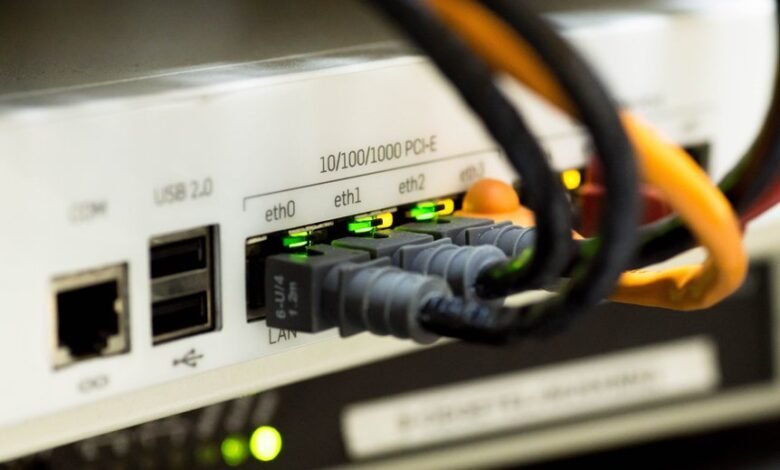
Understanding how 111.159.90.132 functions begins with its role as a network identity. Data moves through DNS, routing tables, and gateways, guided by BGP and ISP policies. Each hop enforces controls, rate limits, and security checks before reaching the destination. The path is observed for timing, reliability, and privacy implications, with session establishment and encryption shaping the exchange. The implications for control and auditing keep stakeholders focused on what comes next.
What an IP Address (111.159.90.132) Is and Why It Matters
An IP address, such as 111.159.90.132, uniquely identifies a device on a network and serves as its addressable location for data transmission. It anchors a conceptual topology, clarifying hosts, subnets, and gateways.
Understanding its role highlights security implications, including access control, traffic isolation, and threat detection, enabling disciplined, freedom-oriented configuration without compromising interoperability, reliability, or accountability in distributed systems.
How Data Finds 111.159.90.132: Routing, ISPs, and Gateways
How does data locate 111.159.90.132 through the network? Routing tables, ISPs, and gateways orchestrate the path. The process begins with DNS resolution, then iterative hops across autonomous systems, each step guided by BGP announcements and prefix filtering. Networks enforce data privacy and routing ethics, limiting exposure and ensuring responsible transit, latency-conscious, configurable, auditable, and transparent for stakeholders.
What Happens When You Reach 111.159.90.132: From Request to Response
When a request reaches 111.159.90.132, the system immediately validates the inbound packet and applies access controls, rate limits, and firewall rules configured on the host or edge device.
Handshake negotiations establish session parameters, followed by data compression where feasible.
Security and privacy considerations govern encryption and integrity checks, while latency and QoS implications shape response timing and resource allocation.
Practical Tips to Use and Secure an IP-Based Connection
To maximize reliability and security, users should start with a structured assessment of their IP-based connection, identifying its path, exposure points, and service requirements.
Then implement layered controls: monitor traffic, apply least privilege, and enable robust authentication.
Regular security auditing reinforces posture, while awareness of privacy myths prevents complacency.
Document configurations, and validate resilience through periodic tests and updates.
Freedom-focused clarity.
Frequently Asked Questions
How Is an IP Address Assigned to Devices by ISPS?
IP assignment is managed via DHCP or static provisioning by ISPs; devices receive public or private addresses. NAT implications arise when multiple customers share a single public IP, guiding translation, port forwarding, and security considerations for user freedom.
Can a Public IP Like 111.159.90.132 Change Over Time?
A striking 40% of users experience change frequency in some ISPs. A public IP like 111.159.90.132 can change over time via dynamic allocation. It requires understanding: change frequency, dynamic allocation, and how to adapt resources.
What Are Common Misconfigurations Affecting IP Reachability?
Misconfigurations affecting IP reachability include incorrect subnet masks, gateway drift, DNS missettings, ARP issues, and firewall rules. This misconfigurations overview informs a concise troubleshooting checklist, guiding practitioners toward structured, actionable remediation while preserving network freedom.
How Do Firewalls Impact Access to a Specific IP?
Firewalls influence access to a specific IP by enforcing firewall rules and access control, determining permitted or blocked traffic. They gracefully gate traffic, subtly shaping reachability, ensuring security while preserving legitimate freedom, and guiding precise, structured implementation.
What Privacy Risks Come With Sharing Your IP Address?
Privacy risks include privacy leakage and tracking risks when sharing an IP; network address translation and dynamic addressing mitigate exposure but do not eliminate it, so individuals should use privacy-conscious practices to preserve freedom.
Conclusion
Despite the earnest machinery, reaching 111.159.90.132 is really just networking cosplay: a tidy parade of routers, masks, and polite packets. Irony tucked in every hop, as if distance, latency, and firewall politeness were mere performance notes. The precise act remains mundane yet essential: configure, route, authenticate, log. Actionable takeaway, then—document paths, secure endpoints, monitor traffic, and verify reachable services. In the end, connectivity succeeds not by luck, but by disciplined, repeatable practices.